
Eye Health Guide · ORINvue
Keratoconus
Hindi / common name: Keratoconus (cornea ka patla hokar cone (shankunuma) ban jana)
Keratoconus is a condition in which the cornea, the clear dome at the front of the eye, gradually thins and bulges into a cone shape. This causes blurred, distorted vision and increasing, irregular astigmatism. It usually starts in the teenage years or early twenties and can progress for years. Early detection matters, because a treatment called corneal cross-linking can often halt progression.
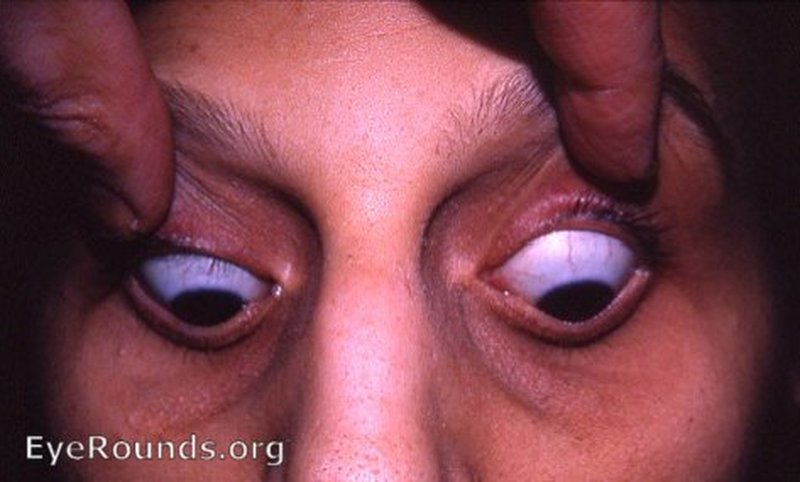

Symptoms of keratoconus
- Blurred or distorted vision that keeps getting worse
- Frequent changes in spectacle power, especially rising cylinder (astigmatism)
- Ghosting or multiple images, especially of lights
- Glare, halos and light sensitivity
- Glasses no longer giving clear vision
- Sudden clouding and pain in advanced cases (acute hydrops)
Causes and risk factors
- Frequent, hard eye rubbing
- Allergic eye disease and eczema, which often lead to rubbing
- Family history of keratoconus
- Onset usually in puberty or early adulthood
- Associated with some conditions such as Down syndrome and some connective tissue disorders
How it is diagnosed
Keratoconus is diagnosed by an ophthalmologist or cornea specialist using a slit lamp and corneal topography or tomography, which maps the shape and thickness of the cornea. An optometrist may suspect it when astigmatism rises quickly or vision cannot be corrected fully with glasses, and should refer for these scans.
Treatment options
- Spectacles or soft toric lenses in early stages
- Rigid gas-permeable, hybrid or scleral contact lenses, which give much clearer vision when glasses no longer do
- Corneal cross-linking (CXL) to strengthen the cornea and slow or stop progression
- Intracorneal ring segments in selected cases
- Corneal transplant in advanced cases
- Treating allergies and stopping eye rubbing
Glasses and lens options
In early keratoconus glasses may still work well, but the prescription can change often, so regular tests are needed. As the cornea becomes more irregular, specialised contact lenses fitted by a contact lens specialist usually give better vision than spectacles.
Prevention and everyday care
- Avoid rubbing your eyes, even when they itch
- Treat itchy, allergic eyes early with a doctor's advice
- If keratoconus runs in your family, get regular eye checks with corneal scans
- See an eye doctor if your cylinder power keeps increasing
When to see an eye specialist the same day
- Sudden clouding of the cornea with pain and watering
- Rapid worsening of vision
- Vision that cannot be corrected with new glasses
Keratoconus in Lucknow
Seasonal allergies and dust in Lucknow can make eyes itch, and teenagers often rub their eyes hard. Breaking that habit and treating allergies early are simple ways to protect the cornea.
How ORINvue can help
At ORINvue, our qualified optometrist, Khushboo Gangwar, watches for fast-changing or hard-to-correct cylinder power during a complete 10–15 minute eye test, free with every package. If you need corneal scans or treatment, she guides you to a trusted eye specialist. Where glasses still help, ORINvue makes accurate toric spectacles from ₹999 all-inclusive.
Book Free Eye TestFrequently asked questions about Keratoconus
Is keratoconus serious?
It can significantly affect vision if it progresses, but with early diagnosis, cross-linking and specialised lenses, most people keep useful vision.
Can keratoconus be cured?
There is no cure that restores a normal cornea, but cross-linking can halt progression and lenses or surgery can improve vision.
Does eye rubbing really cause keratoconus?
Frequent hard eye rubbing is strongly linked to keratoconus and its progression. Avoiding rubbing is one of the most important steps.
Can I have LASIK with keratoconus?
LASIK is generally not done on eyes with keratoconus because it can weaken the cornea further. Your eye surgeon will screen for it before any laser surgery.
Why are my glasses not clear even with new power?
Irregular astigmatism from keratoconus may not correct fully with glasses. Rigid or scleral contact lenses often give clearer vision.
Explore more: Eye Health Guide (all conditions) · Optical & spectacles questions answered · ORINvue blog
Book a free eye test at ORINvue
Every eye test is done by our qualified optometrist, Khushboo Gangwar, free with every spectacle package. Opening December 2026 in Kalyanpur, Vikas Nagar, Lucknow. Open daily 10 AM–10 PM.
Book Free Eye Test