Why is glaucoma called the silent thief of sight and who needs a check-up?
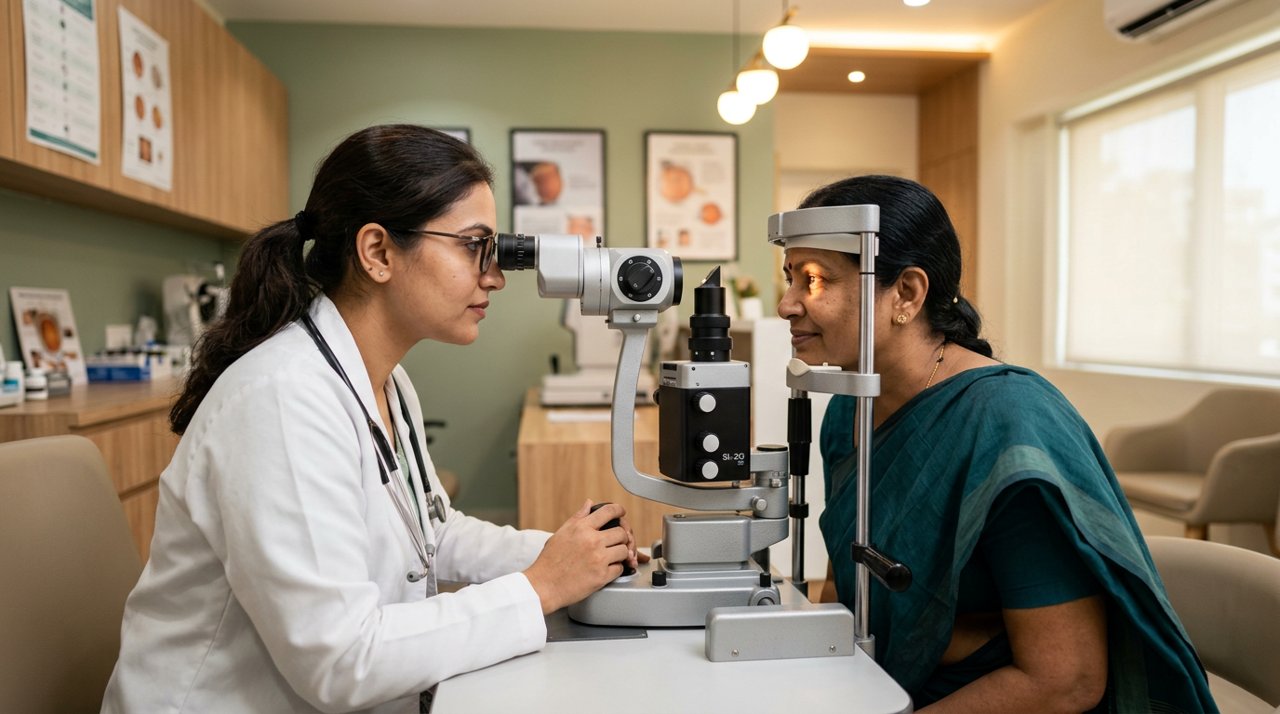
Glaucoma is called the silent thief of sight because the most common type causes no pain and no early symptoms while it slowly damages the optic nerve, starting with side vision. By the time you notice, a lot of sight may be gone and cannot be brought back. A regular dilated eye exam by an ophthalmologist is the only reliable way to catch it early.
What glaucoma is
The optic nerve carries images from the eye to the brain. In glaucoma it is damaged, often (but not always) because pressure inside the eye is too high for that nerve. Vision loss is permanent, but treatment can slow or stop further loss if started early.
Why it is silent
In open-angle glaucoma, the commonest form, side (peripheral) vision shrinks very slowly. The brain fills the gaps, and central vision stays sharp until late. Many people never realise until a test shows it.
Who is at higher risk
- Age over 40, risk rising with age
- Family history of glaucoma
- Diabetes and high blood pressure
- High myopia (very high minus number)
- Long-term steroid use, including drops, creams or tablets
- Past eye injury
- Thin cornea or high eye pressure found on tests
Warning signs that need urgent care
Angle-closure glaucoma can be sudden: severe eye pain, red eye, headache, nausea, haloes around lights and sudden blur. This needs same-day treatment at an eye hospital.
What the check-up includes
- Eye pressure measurement
- Examination of the optic nerve
- Visual field test
- Scan of nerve layers (OCT) and corneal thickness where needed
- A look at the drainage angle
One pressure check alone is not enough, because some people get glaucoma with normal pressure.
Treatment
Treatment, which only an ophthalmologist can prescribe, may include daily eye drops, laser or surgery. The goal is to protect the remaining vision. It is very important to use drops regularly and keep follow-ups.
Small steps that help
- Test your eyes yearly after 40, earlier with a family history
- Tell your siblings and children if you have glaucoma
- Never use steroid drops without advice
- Stay active and control sugar and blood pressure
Frequently asked questions
Can glaucoma be cured?
It cannot be cured and lost vision cannot be restored, but treatment can slow it.
Can glasses detect glaucoma?
No. Glasses fix focus. A glaucoma check needs pressure, nerve and field tests.
Is glaucoma always high pressure?
No. Normal-tension glaucoma exists.
Can young people have it?
Yes, though it is less common. Risk rises with high myopia and family history.
Does eye exercise help?
No exercise replaces medical treatment.
How ORINvue can help
Every eye test at ORINvue is done by our qualified optometrist, Khushboo Gangwar: a complete vision and eye-health check in 10–15 minutes, free with every package. If you are in a risk group or need pressure and nerve tests, she guides you to a trusted eye specialist for a full glaucoma check. ORINvue also offers most single-vision glasses ready in 24 hours, a free remake within 7 days and free adjustment and cleaning for life. Packages are fixed and all-inclusive: ORIN Basic ₹999, Smart ₹1,999 (blue-cut), Premium ₹3,499 (thin 1.60 blue-cut), Progressive ₹4,999 and Kids Shield ₹1,499.
Read our guide: https://orinvue.netlify.app/eye-health/glaucoma.html .
Information only, not medical advice.
About ORINvue
ORINvue is an optical store opening in December 2026 in Lucknow's Kalyanpur / Vikas Nagar area, open daily 10 AM to 10 PM. It was founded by Abhay Kumar to give Lucknow families honest eye tests and fixed, all-inclusive glasses packages. Visit https://orinvue.netlify.app for details.
Book a free eye test
More answers: Eye Health Guide by ORINvue · Optical & spectacles Q&A
Related questions
How often should I get my eyes tested?
Most adults should have an eye test once a year, or sooner if vision changes. Children are best checked every 6 to 12 months, especially with long study and screen hours. People with diabetes, glaucoma in the family, or anyone over 40 should follow their eye doctor's advice, which is usually a yearly check that includes eye pressure and retina examination.
What is the difference between an optometrist and an ophthalmologist?
An optometrist is a trained eye care professional who tests vision, prescribes spectacles and contact lenses, and screens for eye problems. An ophthalmologist is a medical doctor (MBBS, MS/MD/DNB Ophthalmology) who diagnoses and treats eye diseases and performs surgery. At ORINvue, every eye test is done by our qualified optometrist, Khushboo Gangwar; if your eyes need medical treatment or surgery, she guides you to a trusted eye specialist.
Is the eye test at ORINvue free?
Yes. ORINvue includes a qualified optometrist eye test free with every spectacle package. ORINvue is opening in December 2026 in the Kalyanpur / Vikas Nagar area of Lucknow and will be open daily from 10:00 AM to 10:00 PM. You can register your interest through the Book Free Eye Test form on the website.
At what age should a child have the first eye test?
A child's eyes should be checked in infancy if parents notice anything unusual, and every child should have a full eye check around age 3 to 5, before starting school. Early tests catch lazy eye, squint and high power while treatment works best. After that, a check every 6 to 12 months is sensible during school years.
Is −0.25 or −0.50 power worth wearing glasses for?
It depends on your needs. Very low power may not need glasses all the time, but some people notice clearer vision for driving, the classroom board or night-time with even a small correction. Small astigmatism can also cause strain on screens. Your optometrist will advise whether glasses will help you.
Ask ORINvue a question
Eyes, glasses, lenses ya kids eye care se juda koi bhi sawaal likhiye. ORINvue roz reader questions ka jawaab yahin publish karta hai.